Midwives, nurses, doulas, paramedics, quality improvement specialists and students from 29 States across the country have already registered to attend and are running their drills and preparing to share their experience!
Find Inspiration from Other Teams Who’ve Run This Drill
One of the more challenging transfer scenarios from community birth to hospital, and one that can be–but is not always–emergent, is a retained placenta. The Step Up TogetherRetained Placenta with Doula PresentDrill Kit highlights the complexities of this postpartum situation when it comes to transferring a patient from the community setting into the hospital.
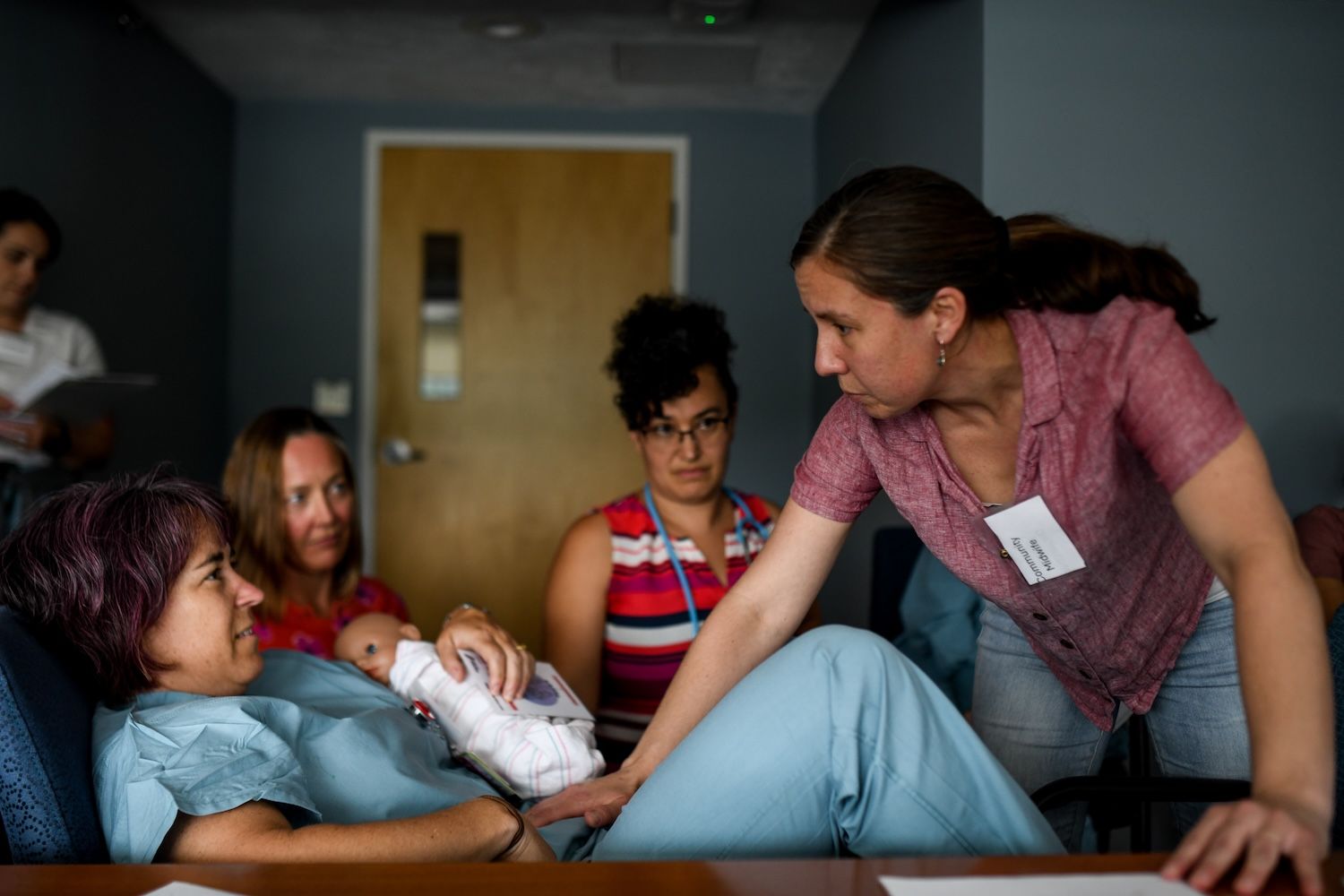
Last year, teams at Mount Auburn Hospital partnered with Cambridge-area midwives and ran theRetained Placenta drillscenario to explore postpartum transfer decision-making, interdisciplinary communication, and the important role doulas can play during emergency situations. The drill created valuable conversations about transfer logistics, collaboration, and strengthening systems across community and hospital settings.
Rather than starting with a large-scale, high-complexity drill involving physically moving locations and transport agencies, the teams modified the scenario to focus first on relationship-building, communication, and hospital readiness. They “right-sized” their drill and staged a conference room inside the hospital as the “home birth site” and temporarily removed EMS involvement. The goal was simple but powerful: create a lower-barrier opportunity for people to show up, participate, test systems and processes, and begin the conversation together. And it worked.
The drill brought together doulas, community birth midwives, labor and delivery nurses, hospital midwives, and physicians. After the drill concluded, participants spent over an hour debriefing the experience, identifying gaps, discussing workflow challenges, and brainstorming practical changes to improve future transfers and patient experiences.
AtStep Up Together, we continue to see that some of the most impactful drills are not the most elaborate ones — they are the ones that bring people together honestly, intentionally, and with a willingness to learn from one another.
We invite you to run the drill with your own team before the debrief—whether as a Full Transfer Drill, Partial Drill, or even a simple table read. Running the scenario beforehand helps teams surface communication gaps, clarify roles, and build stronger transfer processes before a real emergency occurs. We mentioned Mount Auburn’s simulation of a “home birth” in a hospital conference room in our blog post onRight-Sizing Your Drill: Finding the Fit for Your Team.
Whether you are brand new to drills or building on previous experience, joining the Community Debrief is a practical, supportive way to strengthen emergency preparedness and community-to-hospital collaboration.